Byron Gogol
Made for LoveByron Gogol is a technology magnate who makes intimacy an extension of his technological ambitions. He founded and built an empire, but his influence over Hazel Green reaches beyond wealth: he seeks access to her body, behavior, and thoughts through devices and monitoring systems. Their relationship turns the promise of connection into a struggle over consent and privacy, and his eventual death leaves his company in the hands of Fiffany Leiber, whose announced priorities suggest a different direction.
Identity and ambitions
Byron’s immense fortune comes from technologies he both owns and invents. Hazel experiences that wealth as power on a scale she can scarcely comprehend, while Byron describes his business as selling access to information. That description illuminates his approach to personal relationships: knowing more is not merely a practical advantage but something he treats as a form of intimacy and authority.
His ambitions extend to the human brain. He proposes that Hazel and he become the first couple connected through a neural network, with a chip in each person’s brain allowing them to meld. Hazel understands the proposal not as an ordinary shared project but as a demand that she contribute her living brain to research and development. She has not consented, and she believes Byron would not allow her refusal to stop him. The proposal makes the central conflict between them explicit: his language of connection and innovation does not resolve the question of whether Hazel has freely agreed.
Courtship and marriage
Byron approaches courtship in the language of efficiency. He tells Hazel that his schedule and lifestyle leave little room for traditional dating, proposes an initial six-month commitment, and asks that they date exclusively before evaluating the relationship. The arrangement is not legally binding, but its terms frame romance as a defined period with an eventual review. Hazel, for whom commitment and long-term plans have seemed remote abstractions, enters a relationship whose structure Byron has carefully set out.
They marry, but the marriage does not produce the unguarded closeness Byron’s technological vision appears to promise. Hazel recalls that he struggles to let go in ordinary physical intimacy; as monitoring grows more intrusive, sex becomes one of the few boundaries she can still assert. The contrast is sharp: Byron pursues an extraordinary form of union through technology while Hazel increasingly tries to preserve even the ordinary separations that make private life possible.
Surveillance and Hazel’s departure
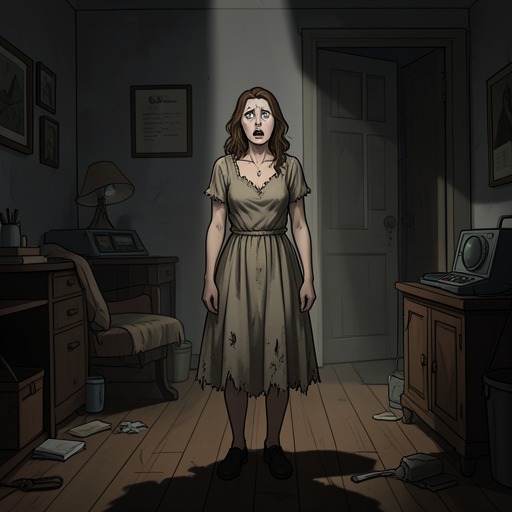
During the marriage, sensors and monitoring at The Hub make Hazel’s everyday life available to Byron. He comments on her activities while away, and meals brought by staff change according to bodily scans she did not know were being collected. He eventually acknowledges cameras and scanners throughout the residence, including the bathroom, and says that her words and actions can be processed to infer her state of mind with nearly 97 percent accuracy. He presents the system as useful for safety, convenience, and health; Hazel experiences it as a presence inside her body and a record of every moment she spends at home.
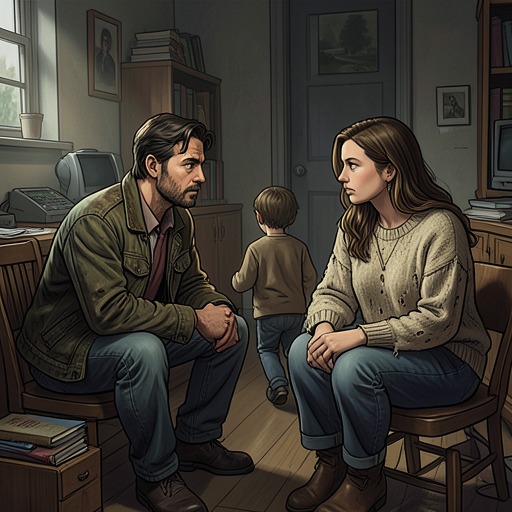
Hazel leaves Byron, taking neither funds nor identification. She is technically homeless and fears that the separation will end badly, yet she tells her father that Byron wanted a chip in her brain and describes their proposed connection as a brain meld. Her concerns also include unexplained, worsening headaches and a nosebleed that triggered an alert through the home’s SmartFilter and caused Byron’s face to appear on a bathroom screen. Hazel suspects he is making her ill so she will admit herself to the company’s private medical facility, but the evidence establishes this as her fear, not as a confirmed account of what caused the symptoms.
Afterward, Byron offers information and equipment rather than accepting her wish to disappear. He says he has placed basic electronics in a weatherproof safe in her backyard, with the anniversary date as its code, and asks her to retrieve a mobile device and call him securely. Hazel refuses, explaining that she does not want to use electronics or his money. His offer shows that even after she has left, he continues to seek a channel into her life; her refusal is a small but deliberate claim to control over her own contact and resources.
The public search and Byron’s death
Byron reports Hazel missing and troubled, describes her as grieving over her terminally ill father, and offers a large reward for information. In a televised interview, he says he has given up hope of finding her alive but expects that she will be discovered. Her disappearance, he admits, compounds feelings of humiliation, fraudulence, and inadequacy because, as her husband, he believes he should have more information about her than anyone else. His public account turns the private failure of access into a spectacle, while the search and his company’s interests remain intertwined.
The same interview reports that Byron has filed for divorce on the grounds of abandonment and introduces Fiffany Leiber as a project manager accompanying him. Later, Hazel and Jasper watch leaked bedroom-camera footage from The Hub. Byron and Fiffany are in bed wearing sleep helmets when Byron sits up in distress and cannot remove his helmet. The public account attributes his death to a technical failure, panic, and a heart attack. Hazel rejects the malfunction explanation and concludes that Fiffany acted intentionally and outsmarted him; the footage and reporting do not independently settle that conclusion, so her interpretation remains distinct from the official account.
Legacy and narrative significance
After Byron’s death, Fiffany is expected to become chief executive of Gogol. Hazel revises her understanding of Fiffany’s aims: she believes Fiffany pursued control of the company rather than Byron, and sees the killing as possibly preventing greater harm. News coverage points to potential changes under Fiffany, including stepping back from some weapons contracts and expanding humanitarian work in art and education technologies. Those plans are presented as prospective, but their contrast with Byron’s brain-meld ambitions marks a possible change in the company’s priorities.
Byron’s story links technological progress to a persistent question of who controls information about a person. The systems he builds can register bodies, alter routines, and interpret behavior, yet their supposed precision does not create mutual trust. In his marriage to Hazel, greater access becomes less a route to shared understanding than a means of reducing her privacy. His public search for a wife he cannot reach completes that irony: the man who sells access to information is left without the knowledge or consent that genuine intimacy requires.